Custom software development
Systems shaped around a specific operational process, where general-purpose products do not fit.
Sheet 01 — Information technology services
CHAIRBEARS HUNTON LTD is an information technology company. It designs and develops custom software, builds and modernises web applications, sets up and maintains cloud infrastructure, connects systems that were never intended to talk to one another, and supports those systems after they are running. Work is carried out as engineering: requirements written down, decisions recorded, changes tested, and handover made complete enough that the client is never dependent on undocumented knowledge.
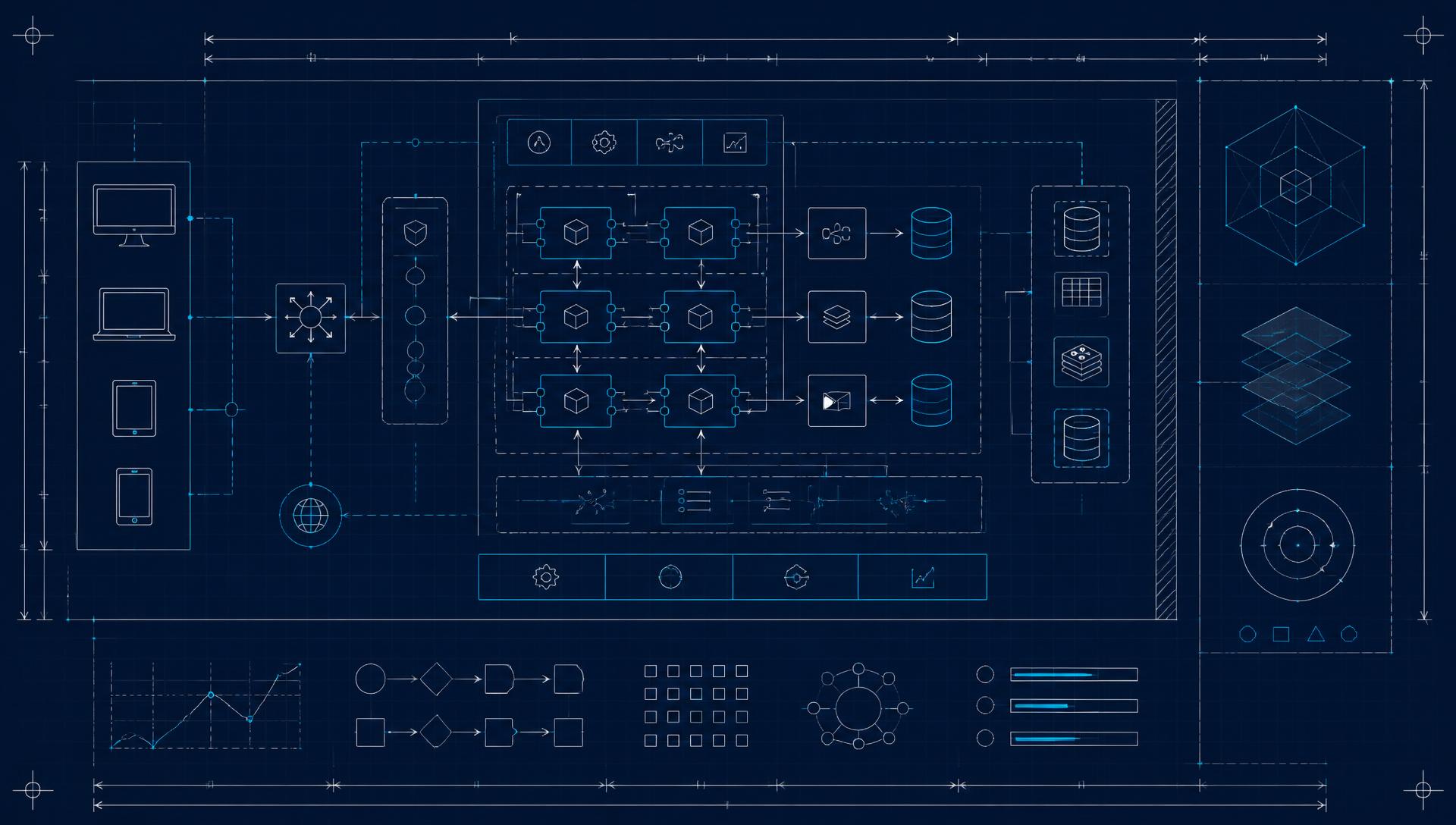
Fig. 01 — Reference platform plan
02Company introduction
Most organisations do not have a software problem in isolation. They have an operational process that software is supposed to support, and the software has either never fitted it properly or has drifted away from it over years of small changes. CHAIRBEARS HUNTON LTD works from that starting point: understand the process, then build or repair the system that serves it.
That means the first output of an engagement is usually written rather than executable — a clear statement of what the system must do, what it must not do, where its data comes from and who is accountable for each part of it. Only when that is agreed does implementation begin. It is slower for a week and considerably faster for the remaining months.
The company works with organisations of different sizes and in different sectors. What they tend to share is a dependence on systems that must keep running while they are being improved, and a preference for suppliers who explain their reasoning instead of presenting conclusions.
03Core technology capabilities
Server-side services, browser front ends, background processing and scheduled jobs, built around explicit domain models rather than ad hoc scripts.
Relational schema design, migrations that can be run repeatedly and safely, query performance work, and reporting structures separated from transactional load.
HTTP and message-based interfaces with versioning, validation and documented contracts, so that consuming systems can be changed independently.
Environment definitions kept in code, repeatable build and release pipelines, configuration separated from artefacts, and rollback treated as a normal operation.
Structured logging, health checks and metrics chosen to answer real operational questions rather than to fill a dashboard.

04Services overview
Ten service areas, each described in full on the Services page. In practice an engagement usually draws on several of them at once, because a system rarely needs only one kind of attention.
Systems shaped around a specific operational process, where general-purpose products do not fit.
Browser-based applications with real state, permissions and workflow, designed for daily use.
Hosting environments defined in code, sized to actual load and reproducible from scratch.
Reliable exchange of data between applications, including legacy systems and third-party services.
Independent assessment of architecture, delivery practice and technical risk, delivered in writing.
Incremental replacement and refactoring of ageing systems while they remain in production.
Automated and manual testing arranged around the behaviour that carries the most business risk.
Ongoing correction, dependency updates and small improvements after release.
Authentication, authorisation, data protection and dependency hygiene handled during design.
Pipelines, reporting structures and the removal of repetitive manual steps from routine work.
05Business challenges addressed

Data re-keyed between systems, reports assembled by hand each month, approvals tracked in email. Each is small; together they consume real capacity and introduce errors that are hard to trace.
Software that works but that nobody is willing to touch, because there are no tests, no documentation and no way to reverse a bad release. The risk grows quietly until a required change becomes an emergency.
A product chosen years ago for a different way of working, now held together with workarounds. The cost appears as staff time rather than as a line on an invoice.
The same customer, order or record existing in three systems with three different values, and no agreed source of truth.
06Working approach
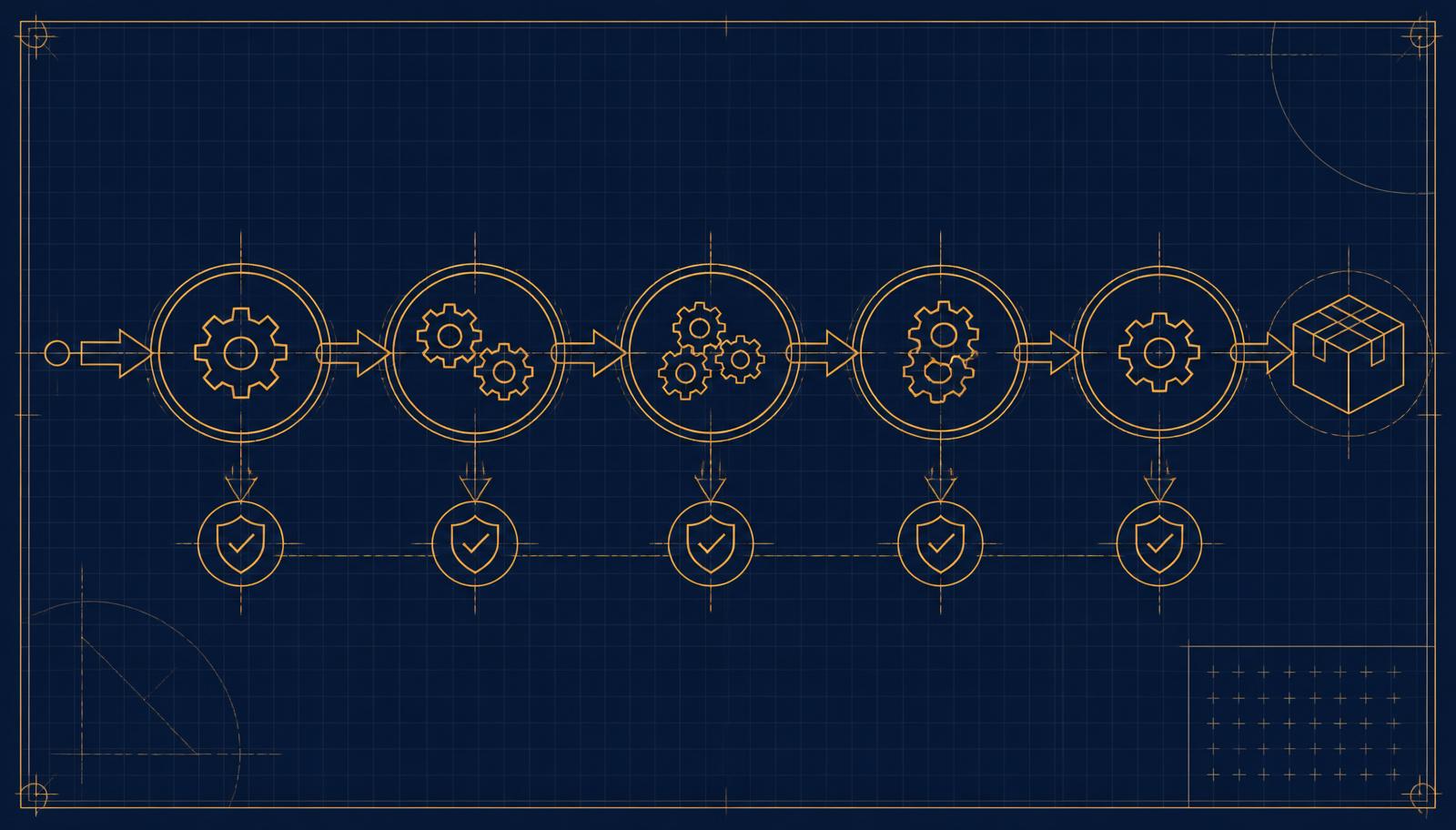
Establish the facts: current systems, data, users, constraints, and the outcome that would count as success.
Write down scope, interfaces, data model and acceptance criteria. Disagreements surface here, where they are cheap.
Build in short increments, each reviewed and tested, with working software available to inspect throughout.
Automated tests, manual checks against acceptance criteria, and a rehearsal of the release procedure.
Documentation, deployment instructions, operational notes, and an agreed arrangement for what happens next.
07Technology and engineering principles
Mature, widely used tools are chosen unless there is a concrete reason to do otherwise. Their failure modes are known, their documentation exists, and other engineers can pick the system up later.
Configuration, contracts and assumptions are written down. A system whose behaviour can only be discovered by running it is unfinished.
Work is delivered in increments that can be reviewed, deployed and reversed individually. Large simultaneous changes make failures difficult to diagnose.
Builds, tests, migrations and deployments run the same way every time, by machine. Manual steps are documented where automation is not justified.
Code is written to be read by whoever maintains it, including the client's own team. Clarity is preferred to cleverness in every case.
Performance work follows measurement. Tuning without evidence usually moves complexity around rather than removing it.
08Security and reliability
Security work that arrives after a system is complete tends to be superficial, because the expensive decisions have already been made. CHAIRBEARS HUNTON LTD addresses it while the structure is still open to change.

09Business contexts served
The following are contexts in which the described services apply. They are examples of typical demand rather than a claim about any particular past client.

Case, project and time records that must reconcile with billing and reporting.
Scheduling, tracking and status data shared between field activity and office systems.
Production and inventory data moving between shop-floor tools and business software.
Catalogue, order and fulfilment data kept consistent across storefronts and back-office systems.
Enrolment, content delivery and progress tracking with clear handling of personal data.
Small teams supporting services that must remain dependable within limited budgets.
Additional engineering capacity for platform work, integrations or long-deferred modernisation.
Contexts where auditability, access control and data retention rules shape the design.
10Reasons organisations may choose us
Written reasoning. Decisions arrive with the alternatives that were considered and why they were rejected, so that the client can disagree on the substance rather than on the outcome.
No lock-in by omission. Source code, infrastructure definitions and documentation belong with the client. Nothing is withheld to make future work dependent on the same supplier.
Plain communication. Progress is reported in terms of what now works, what does not yet work and what changed in the plan — without technical language used as a shield.
Scope held honestly. When a request would extend the agreed scope, that is stated at the time rather than absorbed quietly and discovered later as a delay.
Continuity after delivery. Systems are handed over in a state where they can be operated by others, and support remains available where a client prefers it.

11Frequently asked questions
12Contact
Enquiries are handled by email. Include the systems involved, the outcome you need and any timing or compliance constraints, and the response will address the specifics rather than restate general capability.
Written enquiries are the quickest route to a considered answer. Describe the system, the problem and the constraints you are working within, and the reply will address them directly.